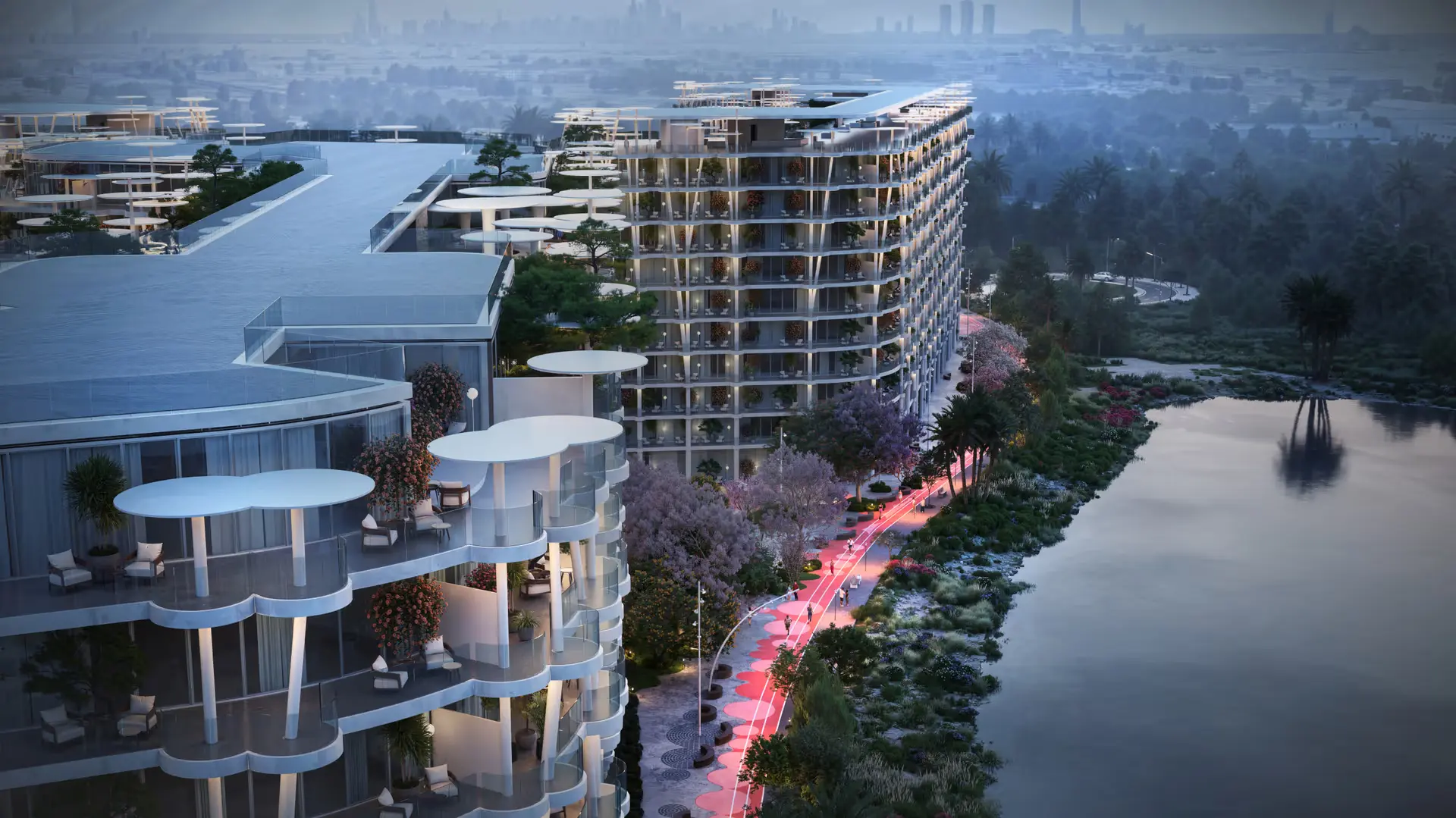
Dubai Off-Plan Property Investment
Dubai Off-Plan Property Investment in 2026: A Complete Guide for Smart Investors
Introduction
Dubai has established itself as one of the world’s most active and internationally recognized real estate markets. Over the past several years, the city has continued to attract investors looking for residential properties, luxury residences, investment opportunities, and long-term real estate assets.
Among the different strategies available to property investors, Dubai off-plan property investment has become increasingly popular.
Off-plan properties give investors the opportunity to purchase a property before construction is completed. Depending on the project, this may allow buyers to enter a development during its launch phase, select from a wider range of available units, and follow a structured payment schedule throughout the construction process.
However, buying off-plan is not simply about finding a property at an attractive launch price.
The real investment decision is much more complex.
An investor needs to evaluate the developer, location, construction quality, pricing, payment structure, future demand, competing supply, and potential exit strategy.
The most important question is not simply whether a property looks attractive today.
The more important question is whether the property will continue to be attractive when it is completed.
This is the fundamental difference between buying an off-plan property and buying an existing property.
When purchasing an existing apartment, investors can physically inspect the building, understand the surrounding neighborhood, study current rental demand, and compare the property against other completed assets.
With an off-plan investment, the investor is purchasing into a future vision.
That vision needs to be supported by strong fundamentals.
A successful off-plan investment therefore begins with research and analysis rather than emotion or marketing.
For investors considering entering the Dubai property market, understanding the mechanics of off-plan investment can make the difference between simply purchasing property and making a well-informed investment decision.
At HRE Development, we believe that successful real estate development requires a clear understanding of the relationship between location, construction, design, functionality, and long-term demand.
These principles are equally important for investors evaluating an off-plan opportunity.
What Is Off-Plan Property Investment?
An off-plan property is a property purchased before construction has been fully completed.
The investor may purchase the property at different stages of development.
Some projects are launched before construction begins.
Others are sold while construction is already underway.
Some units may remain available during the final stages before handover.
The earlier an investor enters a project, the more uncertainty may exist regarding the final development.
However, early entry can also provide access to initial pricing and a broader selection of units.
Later-stage purchases may offer greater visibility because construction progress can be observed, but the investor may enter at a higher price.
This creates an important balance between potential upside and certainty.
Off-plan property investment should therefore be considered as an investment in a future asset.
The property’s eventual value can be influenced by:
- The developer’s execution capability
- Construction quality
- The project’s location
- Surrounding infrastructure
- Future supply
- Market demand
- Economic conditions
- The quality of the final product
This is why investors should evaluate more than the apartment itself.
The surrounding environment is part of the investment.
The developer is part of the investment.
The future market is part of the investment.
A successful decision considers all of these elements together.
Investors considering an off-plan purchase should also familiarize themselves with the official property regulations and registration processes applicable in Dubai through the Dubai Land Department.
Why Investors Consider Dubai Off-Plan Property
Dubai offers a unique combination of international population growth, business activity, tourism, infrastructure development, and real estate development.
The city is also highly diverse in terms of property options.
Investors can find opportunities across different price points and property categories, from apartments and townhouses to villas and luxury residences.
This diversity allows investors to pursue different strategies.
A rental investor may focus on areas with strong tenant demand.
A long-term investor may prioritize future growth potential.
A luxury investor may focus on scarcity and premium positioning.
An international investor may seek a property that can serve as both an investment and a future residence.
Off-plan projects can potentially meet these different requirements.
One of the main attractions is the ability to purchase a new property before completion.
New developments may offer modern layouts, contemporary architecture, updated building systems, and amenities designed around current lifestyle expectations.
Investors may also benefit from structured payment schedules.
However, it is important to understand that a payment plan is not the same thing as investment value.
A property with a flexible payment plan can still be overpriced.
The investor should first determine whether the property itself makes sense.
Only then should the payment structure be evaluated.
The Importance of Choosing the Right Developer
The developer is one of the most important factors in an off-plan investment.
When buying a completed property, the investor is purchasing an existing physical asset.
When buying off-plan, the investor is relying on the developer to deliver that asset.
This makes the developer’s experience, reputation, and execution capability extremely important.
Investors should investigate the company’s previous projects and consider the quality of the properties it has delivered.
Important questions include:
- What projects has the developer completed?
- Were those projects delivered successfully?
- Does the final product match the original concept?
- What is the quality of construction?
- How are previous buildings performing after completion?
- Does the developer understand the target market?
- Does the company have experience with similar developments?
Marketing materials can provide an introduction to a project.
Completed developments provide evidence.
For this reason, investors should study what a developer has actually delivered rather than relying only on promotional material.
At HRE Development, we believe that a development should be approached as a complete process.
The concept, architecture, construction, functionality, and long-term performance of the property should all work together.
For investors, this integrated approach is important because the quality of the final asset will ultimately determine how attractive it is to residents, tenants, and future buyers.
How to Evaluate the Location
Location remains one of the most important factors in real estate.
But when evaluating an off-plan property, investors should consider both the present and the future.
A developing location may look very different several years from now.
New roads, transportation links, commercial destinations, schools, hospitality projects, and residential communities can change the attractiveness of an area.
Investors evaluating future infrastructure should distinguish between confirmed development initiatives and speculation, using official government information such as the The Official Portal of the UAE Government as a starting point for broader context.
Investors should therefore consider:
Accessibility
How easily can residents reach major destinations?
This includes business districts, airports, highways, retail centers, schools, healthcare facilities, and entertainment destinations.
Existing Infrastructure
What is already available?
A location with established infrastructure may offer greater certainty.
Future Infrastructure
What improvements are planned or under construction?
Future infrastructure can support long-term demand, but investors should distinguish between confirmed projects and speculation.
Surrounding Development
What other projects are being developed nearby?
A successful community often benefits from complementary developments around it.
Demand
Who will live in the area?
Understanding the future target market is essential.
The best location is not necessarily the most famous location.
It is the location that offers the strongest combination of accessibility, demand, infrastructure, and long-term potential for the specific property being purchased.
Understanding Property Pricing
The purchase price is an obvious consideration, but investors should avoid evaluating price in isolation.
A lower price does not automatically mean better value.
The property may be cheaper because of:
- A less established location
- Lower construction quality
- Limited amenities
- Weaker demand
- Higher future supply
- An inexperienced developer
A premium property may command a higher price because it offers:
- A stronger location
- Better views
- Higher-quality construction
- Scarcity
- Better design
- Stronger demand
The correct question is therefore:
What am I receiving in exchange for the price I am paying?
This is especially important when comparing luxury developments.
A premium price should be supported by tangible characteristics.
Investors should identify exactly what makes the property different and whether future buyers or tenants will recognize that difference.
Why Price Per Square Foot Matters
Price per square foot is an effective tool for comparing properties.
It allows investors to compare properties of different sizes more consistently.
However, the comparison must be made between genuinely comparable properties.
Investors should consider:
- Location
- Building quality
- Unit type
- Floor level
- Views
- Amenities
- Completion timeline
- Developer reputation
A lower price per square foot does not necessarily indicate a better investment.
A premium may be justified if the property offers something that competing projects cannot easily replicate.
The objective is therefore not to find the cheapest price per square foot.
The objective is to understand whether the price is justified by the property’s fundamentals.
Payment Plans and Financial Planning
Payment plans are a major consideration for many off-plan investors.
Instead of paying the entire purchase price immediately, the buyer may make payments according to the project’s construction schedule.
This can provide greater flexibility.
However, investors need to calculate the complete financial commitment.
This includes:
- Initial deposit
- Construction payments
- Handover payments
- Registration costs
- Service charges
- Financing costs
- Future ownership expenses
An investor should understand exactly how much capital will be required and when.
This is particularly important when purchasing more than one property.
Several overlapping payment plans can create significant financial pressure even when each individual investment appears manageable.
A good property investment should fit within the investor’s broader financial plan.
The payment structure should support the investment strategy rather than be the primary reason for purchasing.
Rental Income or Capital Appreciation?
Investors should determine their primary objective before choosing an off-plan property.
Rental Income
Investors focused on rental income typically prioritize:
- Tenant demand
- Accessibility
- Practical layouts
- Competitive pricing
- Low vacancy risk
The objective is to generate consistent income.
Capital Appreciation
Growth-focused investors may prioritize:
- Strategic locations
- Future infrastructure
- Scarcity
- Strong development quality
- Long-term demand
The objective is to benefit from future increases in property value.
A Combination of Both
Some investors seek a balanced strategy.
They want reasonable rental potential while maintaining long-term growth prospects.
None of these strategies is universally superior.
The correct choice depends on the investor’s financial goals and time horizon.
Understanding Investment Risk
Off-plan property investment carries risks that investors should understand before committing capital.
Development Risk
The project needs to be delivered successfully and according to expectations.
Market Risk
Property market conditions may change between purchase and completion.
Liquidity Risk
An investor may not always be able to sell quickly at the desired price.
Supply Risk
New competing properties may enter the market.
Financial Risk
Future payment obligations may create pressure if the investor’s financial circumstances change.
The objective is not to eliminate every risk.
The objective is to understand the risks and ensure that they are appropriate for the investment strategy.
Common Mistakes Investors Make
One of the most common mistakes is choosing a property simply because the launch price appears attractive.
Another is ignoring the developer.
Some investors also focus too heavily on payment plans without analyzing the underlying asset.
Other common mistakes include:
- Buying based on hype
- Ignoring future supply
- Assuming rental returns are guaranteed
- Failing to research the location
- Choosing a property without defining the target tenant
- Having no exit strategy
- Overlooking construction quality
- Investing too much capital in one project
A disciplined investor evaluates the entire investment rather than focusing on one feature.
A Practical Off-Plan Investment Checklist
Before purchasing, investors should ask:
Developer
- Who is developing the project?
- What has the developer completed?
- What is the quality of previous projects?
Location
- Is the area accessible?
- What infrastructure exists?
- What infrastructure is planned?
- What developments are happening nearby?
Property
- Is the layout efficient?
- Is the unit positioned well within the building?
- Is the property likely to appeal to future buyers and tenants?
Pricing
- How does the price per square foot compare?
- Is the premium justified?
Payment Plan
- What is the total financial commitment?
- When are payments due?
- Can the investor comfortably meet future obligations?
Strategy
- Is the objective rental income or appreciation?
- Who is the future buyer or tenant?
- What is the planned exit strategy?
If these questions can be answered clearly, the investor is in a much stronger position to make an informed decision.
Frequently Asked Questions
Is Dubai off-plan property a good investment?
It can be, but the outcome depends on the specific project, developer, location, pricing, and investment strategy.
Why is the developer important?
The developer is responsible for delivering the asset. Its experience and execution capability can directly influence the quality and success of the finished project.
Should I buy early in the development?
Early entry may provide access to initial pricing and a wider choice of units, but it also involves greater uncertainty and a longer waiting period.
Is a payment plan enough reason to buy?
No. The underlying property must make sense independently of the payment plan.
What is more important: location or price?
Both matter, but a low price in a weak location is not necessarily better than a higher-priced property in a location with stronger long-term fundamentals.
Should I invest for rental income or capital appreciation?
That depends on your objective. Investors should define their strategy before choosing the property.
Final Thoughts
Dubai off-plan property investment can provide access to new developments and opportunities within one of the world’s most dynamic real estate markets.
But successful investing requires more than finding an attractive launch.
Investors should understand the developer, location, pricing, payment structure, market demand, and potential risks before committing capital.
The best opportunity is not necessarily the cheapest property.
It is the property where the fundamentals align.
At HRE Development, we believe that long-term real estate value begins with thoughtful development, quality construction, functional design, and an understanding of how people want to live.
For investors, this means looking beyond today’s sales pitch and thinking about tomorrow’s property market.
The right question is not simply:
“Should I buy this property?”
It is:
“Why will this property remain valuable after it is completed?”
That is where a disciplined off-plan investment strategy begins.
HRE Development — Building with Purpose. Creating Long-Term Value.