Dubai Real Estate Developer
Dubai Real Estate Developer vs. Property Developer: How to Choose a Developer You Can Trust
Choosing a property is one of the most important decisions a real estate buyer or investor can make.
However, when purchasing a newly developed property, there is another decision that can be equally important:
Who is developing it?
The developer behind a project has a direct influence on almost every aspect of the final property.
From the initial concept and architectural design to construction quality, project management, amenities, handover, and the long-term reputation of the development, the developer plays a central role in determining what the buyer ultimately receives.
This is particularly important in Dubai.
The city has become one of the world’s most active real estate markets, with new residential communities, apartment buildings, villas, townhouses, and mixed-use developments continuously entering the market.
For buyers and investors, this creates an enormous range of choices.
It also creates a challenge.
When multiple projects appear attractive on the surface, how can an investor determine which developer deserves greater confidence?
The answer cannot be found simply by looking at a company’s marketing campaign.
A strong brand name may attract attention, but experienced buyers understand that a developer should be evaluated through evidence.
What has the company actually built?
How well were its previous projects delivered?
Does the developer understand construction?
Does it have a clear approach to design and quality?
How does it manage projects?
Does it understand the needs of future residents?
And perhaps most importantly:
Does the developer’s approach align with the type of property the buyer actually wants to own?
These questions become even more important when purchasing a property before completion.
In this situation, the buyer is not simply purchasing a finished apartment or villa.
They are purchasing a promise of what the finished asset will become.
The developer is responsible for turning that promise into a physical property.
For this reason, understanding how to evaluate a Dubai real estate developer should be a fundamental part of any property purchase decision.
At HRE Development, we believe that development is not simply about creating buildings.
It is about bringing together construction knowledge, architecture, functionality, quality, and a clear understanding of how people want to live.
This article explores the most important factors buyers and investors should consider when evaluating a property developer in Dubai.
Why the Developer Matters More Than Many Buyers Realize
Real estate buyers often focus on three things:
- Location
- Price
- Property size
All three are important.
But the developer can influence how effectively those characteristics are transformed into a successful property.
Two apartments in the same general area can have very different values depending on who built them.
One may have:
- Better construction
- More efficient layouts
- Higher-quality finishes
- Better amenities
- Stronger building management
- Greater buyer confidence
The other may offer a similar size and location but provide a completely different ownership experience.
This difference can affect rental demand, resale potential, maintenance costs, and long-term reputation.
The developer therefore becomes part of the asset itself.
A property is not simply a collection of square meters.
It is the result of a development process.
That process begins long before construction starts.
Developer vs. Contractor: Understanding the Difference
One of the most important concepts for buyers to understand is the difference between a developer and a contractor.
The developer is responsible for the overall project vision and execution strategy.
Depending on the project structure, the developer may be responsible for:
- Selecting the site
- Defining the project concept
- Commissioning architectural design
- Planning the development
- Managing financing
- Coordinating consultants
- Selecting contractors
- Managing project delivery
- Marketing the development
- Selling units
- Managing handover
A contractor, by contrast, is primarily responsible for executing construction according to the agreed plans and specifications.
The distinction matters because development is much broader than construction.
A building can be technically well constructed and still be poorly positioned in the market.
Likewise, a beautiful concept can fail if it is not properly executed.
The strongest development process connects both sides.
The vision must be realistic.
The design must be functional.
The construction must meet the intended standard.
And the final product must satisfy the people who will eventually live in or own it.
This is why investors should examine the complete development model rather than focusing on a single company name.
Start With the Developer’s Track Record
A developer’s previous projects can provide valuable information.
However, buyers should not simply count the number of buildings completed.
The quality of those projects matters more than the quantity.
A strong track record should be examined through several dimensions.
Delivery History
Were projects completed on schedule?
While delays can occur in any major development, a consistent pattern of delivery issues may indicate weaknesses in project management.
Construction Quality
How have completed properties performed after handover?
A building should not be judged only on the day it is delivered.
Its quality should be evaluated over time.
Design Consistency
Does the developer have a recognizable approach to design?
Is there a clear philosophy behind its projects?
Customer Experience
How do existing owners describe their experience?
Are handover processes organized?
Are issues addressed professionally?
Project Diversity
Has the developer successfully delivered different types of properties?
Experience across different segments can demonstrate broader capabilities, although specialization can also be valuable.
The objective is to identify evidence of competence.
Past performance does not guarantee future results, but it provides a useful reference point.
Examine the Developer’s Construction Philosophy
A developer’s approach to construction can reveal a great deal about its priorities.
Some developers focus heavily on speed.
Others focus on design.
Others prioritize cost efficiency.
The strongest approach is usually one that balances multiple factors without compromising the fundamentals.
Construction quality should be considered at every level.
This includes:
- Structural systems
- Building envelope
- Waterproofing
- Mechanical systems
- Electrical systems
- Plumbing
- Interior finishes
- External landscaping
- Common areas
Buyers do not need to become construction engineers.
But they should understand that the quality of a building is determined by far more than what is visible in a show apartment.
The finishes may look impressive.
The real test is how the entire building performs over time.
This is why a developer with a strong construction background can bring valuable expertise to the development process.
At HRE Development, construction knowledge is an important part of the company’s approach to real estate.
The objective is to create developments where the design and construction process work together rather than existing as separate stages.
For buyers, this integrated approach can create greater consistency between the original vision and the completed property.
Evaluate the Quality of the Development Concept
Before a building is constructed, it begins as an idea.
The quality of that idea matters.
A strong development concept should answer several questions.
Who is the property designed for?
Why should someone choose it?
What does it offer that competing developments do not?
How does it fit into the surrounding community?
Is the concept based on a genuine market need?
A project does not necessarily need to be unique in every possible way.
But it should have a clear reason for existing.
For example, a residential project might focus on:
- Wellness
- Family living
- Urban convenience
- Waterfront lifestyle
- Nature
- Luxury
- Community living
The concept should then influence the architecture, layouts, amenities, and overall experience.
When every part of the development supports the same idea, the result can feel more coherent.
This coherence can become a competitive advantage.
Study the Architecture
Architecture plays an important role in how a property is perceived.
However, good architecture is more than visual appearance.
The design should respond to the environment and the people who will use the building.
Buyers should consider:
- Natural light
- Views
- Privacy
- Orientation
- Building proportions
- Balcony design
- Circulation
- Entrance experience
- Relationship between private and shared spaces
A visually impressive building can lose its appeal if the internal spaces are inefficient.
The best developments combine visual identity with practical living.
This is particularly important in competitive real estate markets.
Buildings with strong architectural character can become recognizable landmarks.
But long-term value comes from more than appearance.
The building must also work.
Analyze Unit Layouts
One of the most overlooked aspects of buying a property is the internal layout.
Buyers often compare properties based on total size.
This can be misleading.
Two apartments with the same area can have completely different levels of usability.
An efficient layout may provide:
- Better furniture placement
- More storage
- Better privacy
- Improved natural light
- More functional living spaces
An inefficient layout may waste valuable space on corridors or poorly positioned areas.
This matters for both homeowners and investors.
A practical apartment is likely to appeal to a broader range of residents.
That can support both rental and resale demand.
When evaluating a developer, buyers should therefore examine the quality of its floor plans rather than focusing only on external architecture.
Look at the Amenities — But Think Beyond the Marketing
Modern developments often include extensive amenity packages.
These can include:
- Swimming pools
- Fitness centers
- Landscaped gardens
- Children’s areas
- Wellness facilities
- Social lounges
- Co-working spaces
- Outdoor recreation
Amenities can enhance the resident experience.
But buyers should ask a more important question:
Are these amenities actually useful?
A development does not become better simply because it has more facilities.
The quality, design, accessibility, and maintenance of those facilities matter.
The best amenities are those that support the lifestyle of the target residents.
For families, this may mean outdoor spaces and children’s facilities.
For professionals, it may mean fitness and co-working spaces.
For luxury buyers, it may mean privacy, concierge services, wellness, and premium shared areas.
The developer should understand the difference between adding features and creating value.
Transparency and Buyer Communication
Real estate is a significant financial commitment.
Buyers therefore need clear information.
A developer should communicate effectively throughout the purchasing process.
Important information may include:
- Project details
- Payment schedules
- Construction progress
- Handover expectations
- Property specifications
- Contractual obligations
For off-plan projects, transparency becomes particularly important because buyers cannot physically inspect the finished property at the time of purchase.
The more information available, the easier it becomes for buyers to make informed decisions.
Investors should therefore pay attention to how a developer communicates before signing a contract.
The purchasing experience can provide an indication of the broader customer experience.
Understanding Dubai’s Regulatory Environment
Buyers considering property in Dubai should understand the regulatory framework governing real estate transactions.
For off-plan purchases, project registration and escrow arrangements are particularly relevant.
The official Dubai Land Department’s project registration service explains the process through which development companies register real estate projects and establish escrow arrangements for off-plan sales. The Dubai Land Department’s official FAQ section also provides information about real estate escrow accounts and their role in regulating funds connected with off-plan projects.
This does not replace professional legal or financial advice.
However, it reinforces an important principle:
Buyers should verify the official status of a project and understand the legal framework before committing funds.
A reputable developer should be willing to provide clear information and direct buyers toward the appropriate official channels.
Construction Progress and Project Monitoring
For an off-plan property, construction progress provides an important indication of project execution.
Buyers should look for clear evidence of progress.
This may include:
- Foundation work
- Structural completion
- Façade installation
- Interior works
- Landscaping
- Testing and commissioning
However, construction progress should not be evaluated only through photographs.
The investor should also consider whether progress aligns with the expected project timeline.
The official Dubai Land Department provides services and information related to project registration and project monitoring, giving buyers an additional reference point when assessing a development.
The principle is simple:
The more transparent the project, the easier it is for buyers to understand what they are purchasing.
Does the Developer Understand Its Target Market?
A strong developer knows who its customers are.
This is visible in the property itself.
For example, a development designed for families may prioritize:
- Larger layouts
- Green spaces
- Schools and community access
- Children’s facilities
A project aimed at young professionals may focus on:
- Efficient apartments
- Connectivity
- Fitness
- Social spaces
A luxury development may prioritize:
- Privacy
- Premium materials
- Exceptional views
- Concierge services
- High-end amenities
When a developer understands its audience, the development tends to feel more coherent.
The property is designed around actual needs rather than a collection of generic features.
Evaluate the Location and the Developer Together
A strong developer cannot compensate for every weakness in a location.
Likewise, an excellent location does not automatically guarantee a successful project.
The two should be evaluated together.
Consider:
- Is the developer’s product appropriate for the location?
- Does the development complement the surrounding area?
- Is the target market realistic?
- Is the price aligned with the location?
- Does the project have a clear competitive position?
A luxury project in an emerging area may require a very different strategy from a mid-market project in an established community.
The developer should understand that relationship.
HRE Development’s Approach to Real Estate
At HRE Development, the development process is approached as a complete system.
The objective is not simply to construct a building.
It is to create a property where architecture, construction, functionality, lifestyle, and long-term value work together.
The company’s current portfolio includes projects across several Dubai communities, including Sakura Gardens in Falcon City – Dubai Land, Wadi Hills in Wadi Al Safa, Celeste at Al Jaddaf Waterfront, and SkyHills Astra in Dubai Science Park, alongside the SkyHills Residences portfolio.
This range of locations and project concepts demonstrates the importance of understanding the specific context of each development.
A project should respond to its location rather than simply reproducing the same formula everywhere.
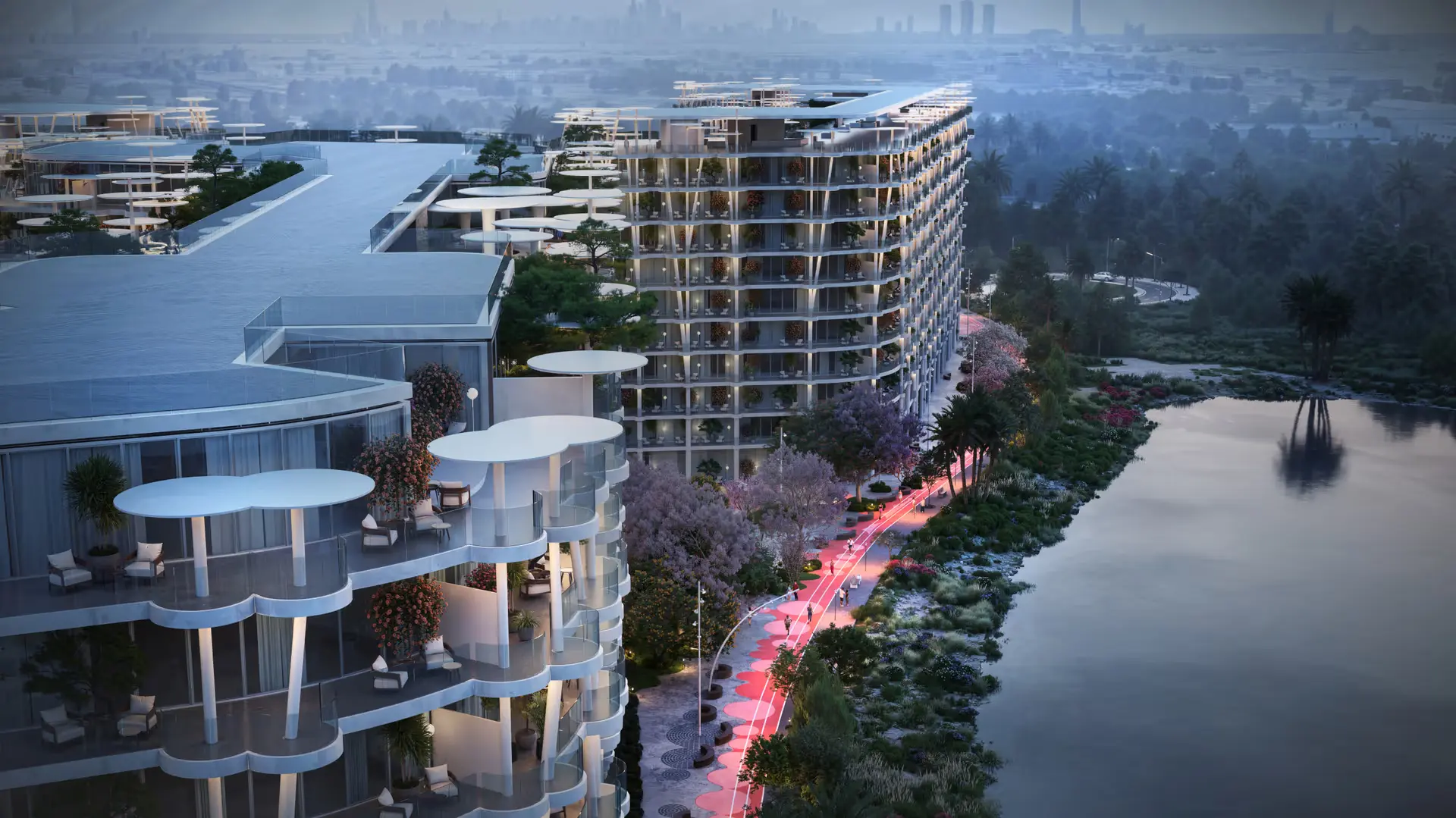
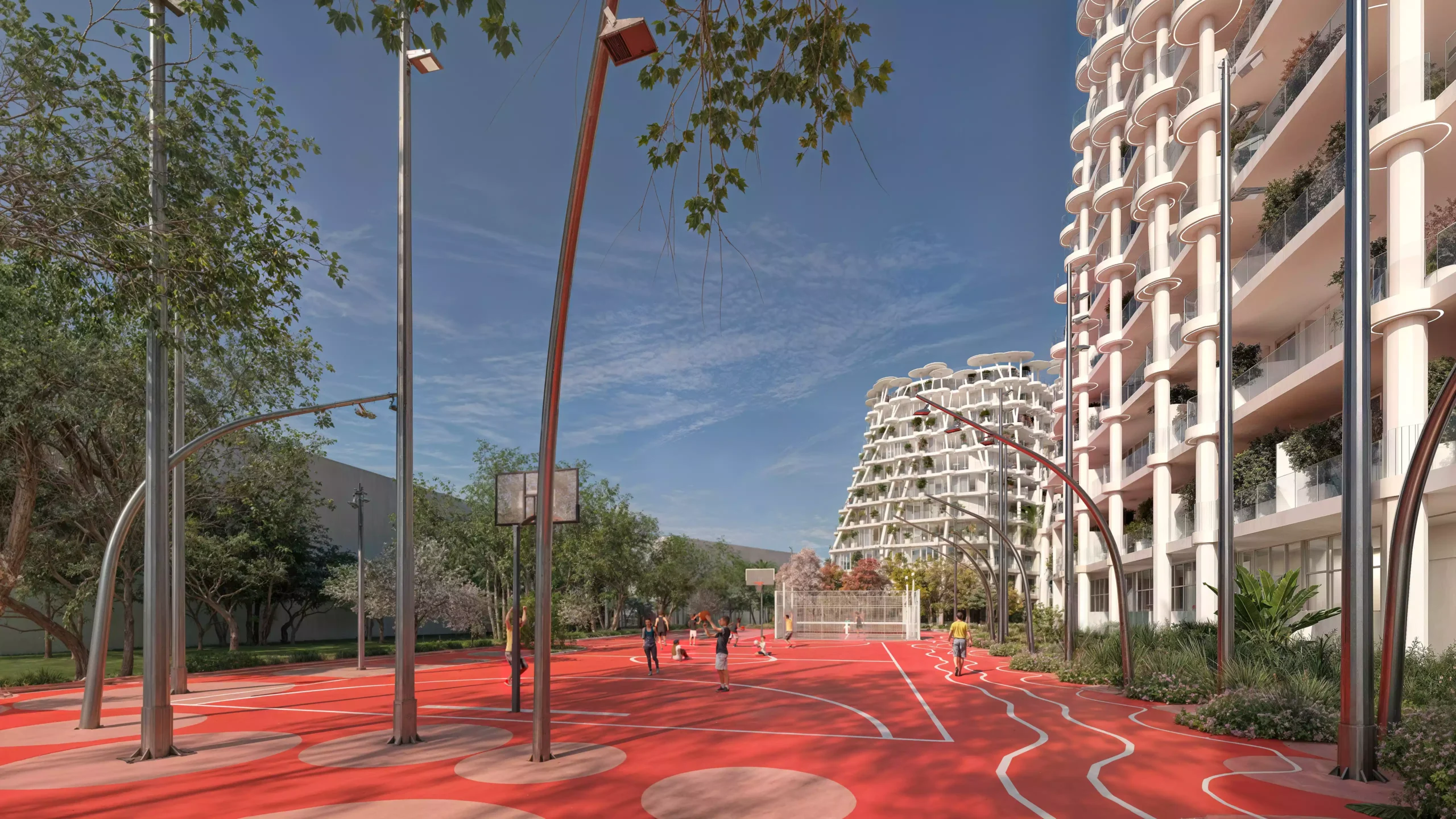
For example, the Sakura Gardens project is positioned as a resort-style, low-rise residential community with a focus on wellness and green space, while its project information describes a masterplan with more than 50% dedicated to greenery and more than 25,000 square meters of amenities.
This illustrates a broader principle:
The strongest developments are designed around a clear identity.
The concept should influence the architecture.
The architecture should support the lifestyle.
The construction should deliver the design.
And the final property should provide an experience that remains relevant after handover.
Questions to Ask Before Choosing a Developer
Before purchasing, buyers should ask:
1. What has the developer already built?
Look beyond promotional materials.
2. How were previous projects delivered?
Study quality and execution.
3. Does the developer understand construction?
Development requires more than marketing and sales.
4. Is the project concept clear?
Understand why the development exists.
5. Is the design functional?
Examine layouts, not only exterior images.
6. Are the amenities relevant?
More does not always mean better.
7. Is the project properly registered?
Verify the official project status.
8. Is the payment structure clear?
Understand every financial obligation.
9. Does the location fit the project?
Evaluate the development and location together.
10. Would you still want to own the property five years after handover?
This final question can reveal whether the investment has genuine long-term appeal.
Frequently Asked Questions
How do I choose a real estate developer in Dubai?
Start by evaluating the developer’s completed projects, construction quality, delivery history, design philosophy, transparency, and understanding of the target market.
Is a famous developer always the best choice?
Not necessarily. Brand recognition can be useful, but buyers should evaluate the specific project and the developer’s actual ability to deliver it.
Why is construction experience important?
Construction knowledge can improve project execution, quality control, coordination, and the consistency between design and final delivery.
Should I visit a developer’s completed projects?
Yes. Whenever possible, examining completed developments can provide valuable insight into the actual quality of the developer’s work.
What should I check before buying an off-plan property?
Buyers should verify the project, developer, payment terms, registration status, escrow arrangements where applicable, and contractual obligations.
Does the developer affect resale value?
It can. A strong reputation and consistent quality may contribute to buyer confidence and demand in the resale market.
Final Thoughts
Choosing a Dubai real estate developer is ultimately about evaluating trust through evidence.
A strong developer should have more than an attractive website or impressive marketing materials.
It should demonstrate the ability to create a clear concept, manage complex projects, deliver quality construction, and understand the people who will eventually live in the properties it creates.
For buyers and investors, this means looking beyond the apartment itself.
Study the developer.
Study the completed projects.
Study the construction.
Study the design.
Study the location.
And most importantly, understand how all of these factors work together.
At HRE Development, we believe that every successful property begins with a clear purpose.
The goal is not simply to construct more buildings.
It is to create places that are thoughtfully designed, carefully developed, and built to deliver lasting value.
Because when the developer gets the fundamentals right, the result is more than a property.
It becomes an asset with a future.
HRE Development — Building with Purpose. Creating Long-Term Value.