Emerging Areas in Dubai for Property Investment
Dubai’s Emerging Real Estate Areas: How to Identify the Next High-Growth Community
One of the biggest questions in real estate investment is simple:
Where should you buy?
In a mature market, investors often look toward established neighborhoods with proven demand.
These areas may already have strong infrastructure, active rental markets, retail destinations, schools, healthcare facilities, and transportation links.
But established locations often come with another characteristic:
Higher entry prices.
This is why many experienced investors also study emerging communities.
An emerging area is a location that is still developing but shows evidence of future growth.
The challenge is that not every developing area becomes a successful investment destination.
Some communities grow rapidly.
Others take much longer.
Some benefit from major infrastructure.
Others struggle with oversupply.
Some attract residents and businesses naturally.
Others remain dependent on speculative expectations.
For investors, the key is learning how to distinguish between genuine growth potential and simple market hype.
This requires more than looking at a map.
Investors should study infrastructure, accessibility, population, employment, schools, healthcare, retail, hospitality, future development, competing supply, and the type of property being offered.
The objective is not to predict the future perfectly.
That is impossible.
The objective is to identify areas where multiple indicators point in the same direction.
This approach can help investors identify locations with stronger potential before they become fully established.
Dubai’s long-term urban development strategy provides an important context for this analysis. The Dubai 2040 Urban Master Plan reflects the city’s broader approach to future urban growth, communities, green spaces, mobility, and infrastructure. Investors can explore the official Dubai 2040 Urban Master Plan to understand the wider direction of Dubai’s urban development.
For property investors, this broader perspective is valuable.
A property does not exist in isolation.
It exists within a city.
And cities evolve.
What Is an Emerging Real Estate Area?
An emerging real estate area is generally a location that is undergoing significant development and has the potential to become more established over time.
It may have:
- New residential projects
- Infrastructure investment
- New roads
- Transportation improvements
- Commercial development
- Retail
- Schools
- Healthcare
- Hospitality
- Growing population
However, the term “emerging” should not be used loosely.
A location with one new building is not necessarily an emerging community.
The strongest emerging areas usually demonstrate several growth indicators simultaneously.
For example, a location may experience:
- New residential construction
- Improved connectivity
- New commercial activity
- Increasing population
- Greater investor interest
When these factors reinforce each other, the area’s potential becomes more compelling.
Why Investors Look at Emerging Communities
The main attraction is the possibility of entering a market before it becomes fully mature.
Established communities often have well-defined pricing.
Emerging communities may offer greater room for future development.
This does not mean that every emerging location will outperform established neighborhoods.
It means the investment thesis can be different.
In a mature location, investors may prioritize:
- Income stability
- Established rental demand
- Lower uncertainty
In an emerging location, investors may prioritize:
- Capital appreciation
- Future infrastructure
- Early entry
- Long-term growth
The right strategy depends on the investor’s risk tolerance and time horizon.
The First Indicator: Infrastructure
Infrastructure is one of the strongest signals of future development.
Investors should examine:
- Road networks
- Public transportation
- Metro access
- Airport connectivity
- Major highways
- Pedestrian infrastructure
Improved infrastructure can make a previously remote location more accessible.
Accessibility can then attract:
- Residents
- Businesses
- Retail
- Hospitality
- Schools
This can create a positive development cycle.
However, investors should be careful when evaluating planned infrastructure.
There is a major difference between:
- Existing infrastructure
- Projects under construction
- Officially planned projects
- Unconfirmed proposals
The investment thesis should be based primarily on information that can be verified.
The official Dubai 2040 Urban Master Plan is one useful source for understanding Dubai’s broader approach to urban growth and future development. Dubai 2040 Urban Master Plan
The Second Indicator: Accessibility
An area can have excellent infrastructure and still struggle if it is difficult to reach important destinations.
Investors should consider travel times to:
- Business districts
- Airports
- Schools
- Healthcare
- Shopping
- Entertainment
- Major employment centers
Accessibility affects both buyers and tenants.
A property may be located in an emerging community, but if residents face long or difficult journeys every day, demand may remain limited.
The strongest emerging locations often have the potential to become more connected over time.
This is where infrastructure and accessibility intersect.
The Third Indicator: Population Growth
Real estate ultimately depends on people.
More residents generally create demand for:
- Housing
- Retail
- Restaurants
- Schools
- Healthcare
- Entertainment
- Transportation
Investors should therefore pay attention to population trends.
However, population growth should be analyzed carefully.
A growing population does not automatically mean every property will perform well.
The type of population matters.
Young professionals may create demand for apartments.
Families may prioritize larger homes and schools.
High-income residents may seek luxury properties.
Understanding who is moving into an area is as important as understanding how many people are moving there.
For broader demographic and economic information, investors can refer to the Dubai Statistics Center when researching Dubai’s population and economic environment.
The Fourth Indicator: Employment and Business Activity
Residential demand often follows employment.
When companies establish offices or business operations in an area, employees need somewhere to live.
This can create demand for nearby housing.
Investors should therefore consider:
- Business districts
- Technology hubs
- Healthcare clusters
- Education centers
- Industrial zones
- Logistics hubs
The relationship between employment and housing is one of the strongest fundamentals in real estate.
A community supported by genuine economic activity may have stronger long-term demand than one driven primarily by speculative development.
The Fifth Indicator: Schools and Education
Families often choose where to live based on access to education.
The development of schools, nurseries, universities, and educational institutions can therefore influence residential demand.
For investors targeting family tenants, this factor can be particularly important.
A location that combines:
- Residential development
- Schools
- Parks
- Retail
- Healthcare
may become increasingly attractive to families as it matures.
Investors should therefore consider not only what exists today but what is being developed around the community.
The Sixth Indicator: Healthcare
Healthcare infrastructure can also influence residential attractiveness.
Hospitals, clinics, pharmacies, and specialized medical facilities can increase convenience for residents.
For families and older residents, access to healthcare can be an important consideration.
For investors, healthcare development can also indicate that a community is becoming more established.
As with schools, the broader ecosystem matters.
One clinic does not transform an area.
A growing network of services can.
The Seventh Indicator: Retail and Lifestyle
People do not choose homes based only on bedrooms.
They choose lifestyles.
Retail, restaurants, cafés, entertainment, parks, fitness facilities, and public spaces all influence how attractive a community becomes.
This is particularly relevant in Dubai.
Residents often expect convenient access to lifestyle destinations.
A successful emerging community should gradually develop an ecosystem that allows people to spend more of their daily lives within or near the neighborhood.
This can support both rental demand and long-term property value.
The Eighth Indicator: Future Supply
One of the biggest risks in an emerging area is oversupply.
A location may experience rapid development.
This sounds positive.
But if too many similar properties are delivered at the same time, competition can increase significantly.
Investors should therefore ask:
- How many new units are planned?
- What types of properties are being built?
- Are they competing directly with the property being considered?
- Is demand growing at the same pace?
Supply should always be considered alongside demand.
A growing population can support new development.
But if supply grows much faster than demand, investors may face increased competition.
This can affect:
- Rental prices
- Occupancy
- Resale
- Capital appreciation
Understanding future supply is therefore essential.
Emerging Area vs. Established Community
Both can be attractive investments.
The choice depends on the investor.
Established Community
Advantages may include:
- Proven demand
- Established infrastructure
- More predictable rental markets
- Greater market data
Potential disadvantages may include:
- Higher purchase prices
- Lower room for early-stage appreciation
- More mature competition
Emerging Community
Advantages may include:
- Potentially lower entry prices
- Future infrastructure
- New developments
- Potential capital growth
Potential disadvantages may include:
- Greater uncertainty
- Longer development timelines
- Less established rental demand
- Greater exposure to future supply
There is no universal winner.
The correct choice depends on the investment strategy.
How to Identify a Genuine Growth Opportunity
A strong emerging area usually has several positive signals.
Investors can use the following framework.
Step 1: Identify Infrastructure
Look for existing and confirmed future infrastructure.
Step 2: Study Accessibility
Understand how easily residents can reach major destinations.
Step 3: Examine Population
Determine whether the area’s population is growing.
Step 4: Identify Employment Drivers
Look for businesses, offices, and economic activity.
Step 5: Evaluate Community Services
Study schools, healthcare, retail, and lifestyle amenities.
Step 6: Analyze Supply
Understand how much competing property is expected.
Step 7: Identify the Target Resident
Determine who will actually live there.
Step 8: Evaluate the Property
A good area does not automatically make every property a good investment.
The specific development must also be competitive.
Dubai’s Evolving Urban Landscape
Dubai continues to develop beyond its traditional central districts.
New communities and development corridors are becoming increasingly important as the city grows.
This creates opportunities for developers and investors.
However, future growth should be understood within the broader urban strategy.
The Dubai 2040 Urban Master Plan emphasizes long-term urban development and aims to shape the city’s growth through connected communities, improved quality of life, and a more integrated approach to infrastructure and urban planning. Investors interested in understanding this broader context can consult the official Dubai 2040 Urban Master Plan.
For investors, the implication is important.
The best emerging locations may not necessarily be those receiving the most attention today.
They may be the locations that align with the city’s broader development direction.
HRE Development and Emerging Communities
HRE Development’s portfolio provides an interesting example of how different Dubai locations can support different residential concepts.
The company’s current project portfolio includes developments in Falcon City – Dubai Land, Wadi Al Safa – Dubai Land, Al Jaddaf Waterfront, Dubai Science Park, and Jumeirah Village Circle.
These locations demonstrate that Dubai’s real estate landscape is not limited to a single type of community.
Different areas offer different opportunities.
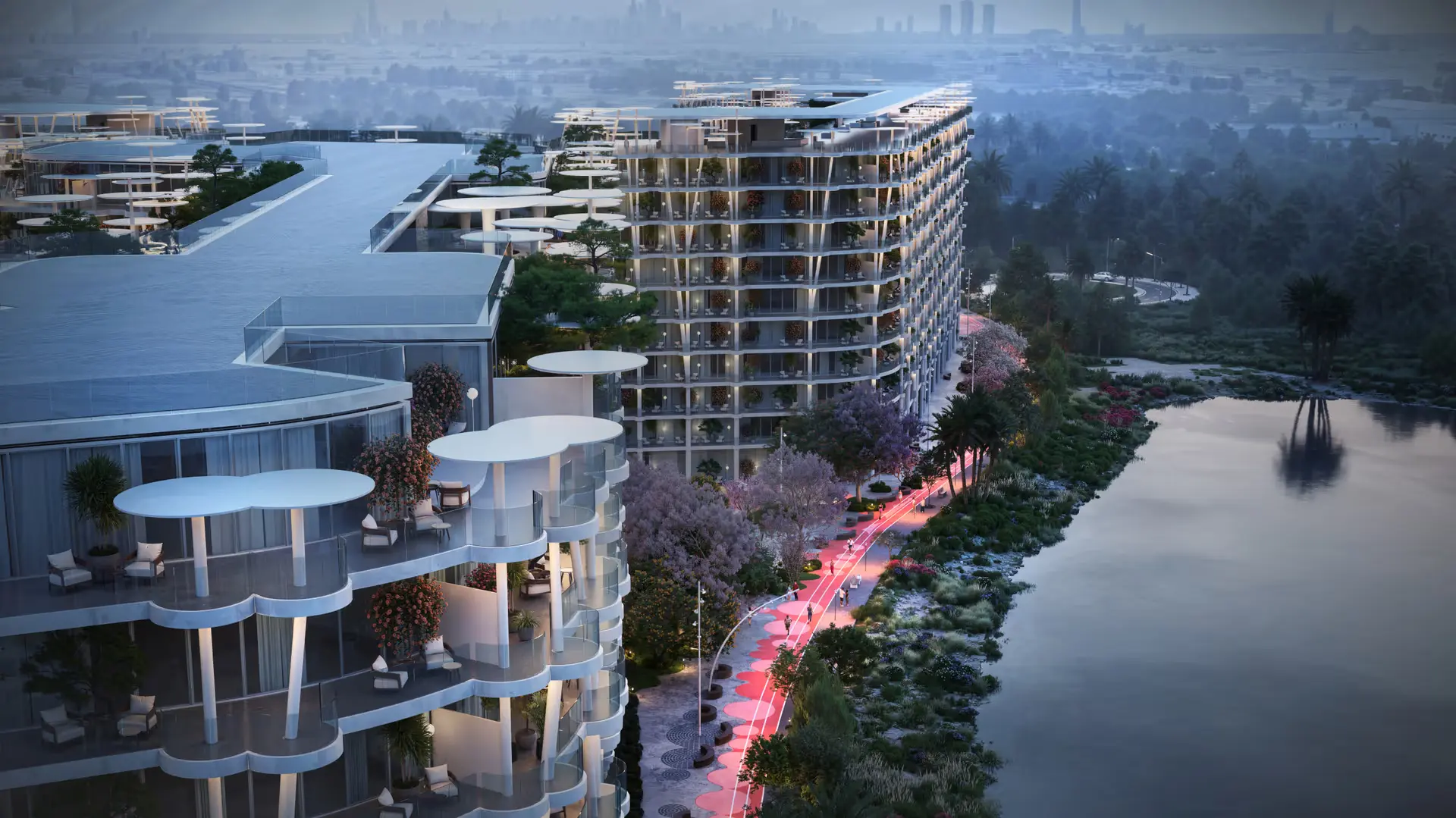
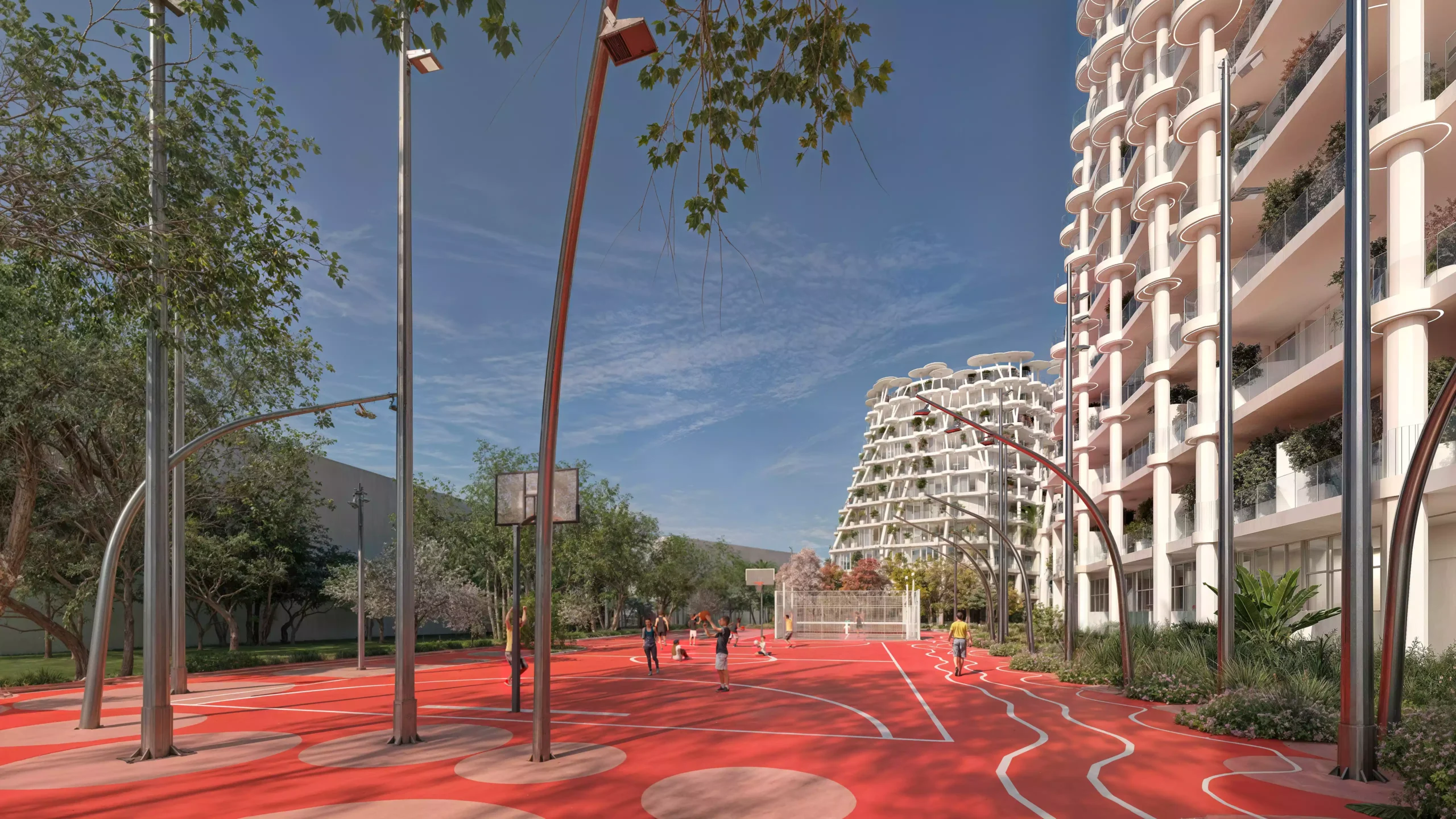
For example, Sakura Gardens is positioned in Falcon City of Wonders in Dubailand as a resort-style residential community with a strong focus on greenery and wellness. Its project information describes four buildings organized around a central park, with more than 50% of the masterplan dedicated to greenery.
This highlights an important investment principle.
The location is only one part of the equation.
The development itself must be appropriate for the location.
A successful project should respond to the area’s future residents and lifestyle requirements.
The same principle applies to developments in other communities.
A property should not simply be placed in an area because the area is growing.
The project should have a reason to belong there.
The Importance of Timing
Timing is one of the most difficult parts of real estate investment.
Invest too early, and the investor may face years of uncertainty.
Invest too late, and some of the potential growth may already be reflected in property prices.
There is no perfect formula.
However, investors can improve their decision-making by studying the development cycle.
An emerging location may pass through several stages:
Stage One: Early Development
Limited infrastructure and relatively low awareness.
Stage Two: Infrastructure Expansion
Roads, transportation, and services begin improving.
Stage Three: Residential Growth
New developments attract residents.
Stage Four: Commercial Development
Retail, restaurants, schools, and services expand.
Stage Five: Community Maturity
The area becomes an established destination.
The investment opportunity can be different at each stage.
Investors need to determine which stage matches their risk tolerance.
How to Avoid Investing in the Wrong Emerging Area
The biggest mistake is assuming that all growth is good growth.
Investors should be skeptical of claims that rely entirely on future expectations.
Red flags can include:
- Unclear infrastructure plans
- Excessive speculative development
- Weak current accessibility
- High levels of competing supply
- Limited employment drivers
- No clear target population
- Heavy reliance on future projects
A strong emerging location should have evidence supporting its growth potential.
The more independent indicators that support the investment case, the stronger the opportunity.
A Practical Checklist for Emerging Areas
Before purchasing property in a developing community, ask:
Location
Is the area strategically positioned?
Infrastructure
What exists today?
Future Development
What is officially planned?
Accessibility
How easy is it to reach major destinations?
Population
Who is expected to live there?
Employment
Where will residents work?
Schools
Are educational facilities available or planned?
Healthcare
Are healthcare services accessible?
Lifestyle
Will residents have convenient access to retail and entertainment?
Supply
How much competing property is coming?
Property
Does the specific development offer something distinctive?
Timing
Is the current price justified by the area’s development stage?
If the answers are positive across multiple categories, the investment thesis becomes stronger.
Frequently Asked Questions
What are emerging areas in Dubai?
Emerging areas are communities experiencing significant development and infrastructure growth that may become more established over time.
Are emerging areas better than established communities?
Not necessarily. Emerging areas may offer greater growth potential but usually involve greater uncertainty.
What is the most important factor when choosing an emerging area?
There is no single factor. Investors should evaluate infrastructure, accessibility, population, employment, services, supply, and the quality of the specific property.
Should I invest before infrastructure is completed?
This depends on the investor’s risk tolerance. Early investment can offer potential upside but also carries greater uncertainty.
How do I know if an area has genuine growth potential?
Look for multiple independent indicators, including infrastructure, population growth, employment, services, and real demand.
Is future supply a risk?
Yes. Excessive future supply can increase competition and affect rental and resale performance.
Should I buy property simply because an area is becoming popular?
No. Popularity is only one factor. The specific property must also have competitive pricing, quality, design, and long-term demand.
Final Thoughts
The most attractive real estate opportunities are not always found in the areas that receive the most attention today.
Sometimes, the strongest opportunities are found by identifying where the city is going next.
But identifying an emerging real estate area requires more than looking for a location with many construction cranes.
Investors need to understand the fundamentals behind growth.
Infrastructure.
Accessibility.
Population.
Employment.
Schools.
Healthcare.
Retail.
Lifestyle.
Supply.
Demand.
And the broader direction of the city’s development.
Dubai’s continued urban expansion creates opportunities for investors who are willing to analyze these factors carefully.
The goal should not be to predict the future perfectly.
It should be to identify locations where multiple fundamentals support long-term growth.
At HRE Development, we believe that successful real estate development begins with understanding the relationship between a property and its surroundings.
A development should not simply occupy a location.
It should respond to it.
It should understand the people who will live there.
And it should be designed with the future of the community in mind.
Because ultimately, the value of a property is connected to the value of the place around it.
The right investment is not simply about finding where Dubai is today.
It is about understanding where Dubai is going next—and identifying the developments that are positioned to grow with it.
HRE Development — Building with Purpose. Creating Long-Term Value.